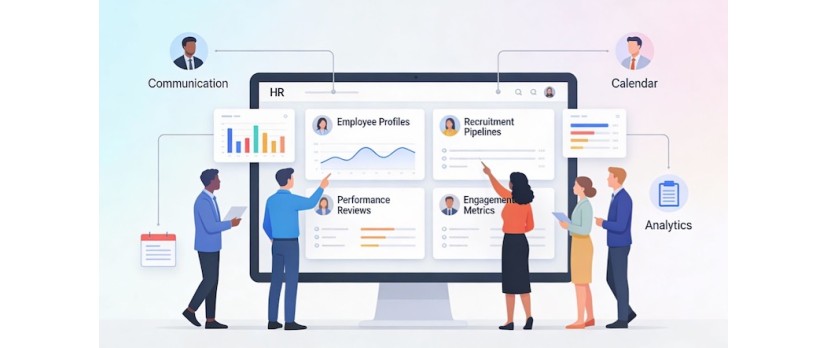
Human capital is unequivocally the most valuable asset. Yet, many organizations still silo their HR functions, relying on disparate systems for recruiting, onboarding, performance management, and employee engagement. This fragmented approach creates data blind spots, hinders strategic decision-making, and delivers a disjointed experience for both candidates and employees. The solution emerging at the intersection of talent management and strategic technology is the adaptation of Customer Relationship Management (CRM) principles for Human Resources. By deploying a dedicated CRM software for HR professionals, enterprises can shift from reactive administrative support to proactive human capital stewardship, fostering a more engaged, productive, and loyal workforce.
While traditional Human Resource Information Systems (HRIS) excel at record-keeping and payroll, they often lack the proactive, relationship-nurturing capabilities of a CRM. A robust CRM software for HR fills this critical gap. It transforms the HR department from a processor of transactions into a builder of lasting relationships – managing the entire employee lifecycle with the same sophistication that sales teams manage client pipelines. This paradigm allows HR to curate personalized experiences, anticipate needs, and strategically cultivate talent from the first point of contact as a candidate through to alumni status, turning every touchpoint into an opportunity to reinforce company culture and value.
Key Benefits for HR
Implementing a CRM framework within HR delivers transformative benefits that directly impact the bottom line.
Enhanced Candidate & Employee Experience: Just as a sales CRM personalizes client interactions, an HR CRM creates a seamless, personalized journey. Automated yet tailored communication keeps candidates warm during recruitment. Onboarding becomes a guided, structured process rather than a paperwork avalanche. Employees receive timely recognition, career pathing suggestions, and learning opportunities based on their profiles, dramatically boosting engagement and retention.
Data-Driven Talent Strategy: Move beyond gut feelings. An HR CRM consolidates data from every stage of the employee lifecycle into a single source of truth. HR leaders can analyze trends in recruitment source effectiveness, pinpoint flight risks by correlating engagement data with performance metrics, and identify skills gaps across the organization. This enables predictive analytics, allowing for proactive succession planning and targeted talent development programs.
Streamlined Recruitment & Onboarding: Manage high-volume recruiting with the efficiency of a sales funnel. Track candidates through stages, automate follow-ups, and maintain rich profiles with interactions, feedback, and documents. This reduces time-to-hire, ensures no candidate falls through the cracks, and builds a robust talent pool for future needs. Onboarding checklists, digital document signing, and task assignments ensure new hires are productive and integrated faster.
Improved Internal Communication & Collaboration: HR CRMs often include social intranet features, project spaces, and centralized communication hubs. This breaks down departmental silos, facilitates knowledge sharing, and strengthens company culture. HR can launch pulse surveys, recognize achievements publicly, and manage internal mobility programs, fostering a transparent and collaborative environment.
Strategic Workforce Planning: With a holistic view of all talent data, HR can align workforce capabilities with long-term business goals. Model different growth scenarios, plan for necessary hires or upskilling, and manage contingent labor all within a unified platform. This elevates HR’s role to that of a strategic partner in the C-suite.
Popular HR CRM & HRIS Platforms
The market offers a spectrum of solutions, from comprehensive HRIS with CRM modules to specialized HR CRMs. Key platforms include:
Bitrix24: A unique contender is Bitrix24. It stands out by offering an exceptionally broad suite of tools within a single platform at a highly competitive price point. Beyond its core CRM software for hr professionals capabilities for managing candidates and employee records, Bitrix24 integrates a full social intranet, project management, task and time tracking, video conferencing, and document management. This makes it a powerful, unified work environment particularly suited for organizations that want to break down barriers between HR, operations, and other departments. Its flexibility allows it to be configured for everything from recruitment pipelines to employee engagement hubs and performance review workflows, all while facilitating seamless collaboration across the company.
Oracle HCM Cloud & SAP SuccessFactors: These enterprise giants offer end-to-end suites with strong CRM-like capabilities for talent acquisition and management, deeply integrated with core HR and financials.
Workday: Renowned for its unified system combining HRIS, financial management, and planning, with excellent talent acquisition and lifecycle management tools that emphasize the employee experience.
Greenhouse & Lever: These are best-in-class Recruiting-Focused CRMs (or ATS with strong CRM features). They excel in optimizing the hiring process, providing exceptional candidate relationship management, and robust integration ecosystems.
BambooHR: A favorite among SMBs, it combines core HRIS functionality with applicant tracking and onboarding in an intuitive interface, effectively serving as an all-in-one people platform.
Choosing the Right Platform: A Strategic Fit
Selecting an HR CRM is not a one-size-fits-all decision. It requires a careful assessment of organizational size, primary pain points, and strategic objectives.
For Small to Mid-Sized Businesses
SMBs need affordability, ease of use, and quick implementation. They benefit from all-in-one platforms that cover core HR, recruitment, and onboarding without complex customization. Solutions like BambooHR, Zoho People (within the Zoho ecosystem), and Bitrix24 are ideal, as they provide robust functionality without enterprise-level complexity or cost. The focus should be on automation to free up HR generalists and improving the foundational employee experience.
For Larger Enterprises
Enterprises require scalability, deep customization, global compliance features, and seamless integration with a complex existing tech stack (like ERP, finance, and legacy systems). They need advanced analytics, sophisticated permission structures, and support for a global, distributed workforce. Platforms like Workday, Oracle HCM Cloud, and SAP SuccessFactors are built for this scale. Implementation is a major strategic project but delivers unparalleled data unity and process standardization across the organization.
For Recruiting-Focused Organizations
For companies where talent acquisition is the primary competitive battleground (e.g., high-growth tech, consultancies), a best-in-breed recruiting CRM may be paramount. Tools like Greenhouse, Lever, and Ashby offer deep functionality for sourcing, nurturing candidate relationships, streamlining interviewer collaboration, and providing exceptional analytics on the hiring process. These often integrate with a broader HRIS for post-hire management.
How to Choose: A Practical Framework
1. Audit & Identify Pain Points: Begin by mapping your current employee lifecycle. Where are the bottlenecks? Is it candidate drop-off, slow onboarding, poor internal mobility, or lack of engagement data? Your primary pain points will guide feature priorities.
2. Define Integration Non-Negotiables: List your essential systems (email, calendar, existing HRIS/Payroll, Slack/MS Teams, etc.). The new HR CRM must integrate seamlessly with these to avoid data silos.
3. Consider the User Experience (UX): If the system is not adopted by HR staff, hiring managers, and employees, it will fail. Demand demos and trial periods. Is it intuitive? Mobile-friendly?
4. Evaluate Vendor Stability & Roadmap: Choose a partner, not just a product. Assess the vendor’s financial health, customer support reputation, and product innovation roadmap. Will they evolve with your needs?
5. Calculate Total Cost of Ownership (TCO): Look beyond the subscription fee. Factor in implementation costs, training, necessary customization, and the cost of internal change management.
FAQs about CRM Software for HR Professionals
How is an HR CRM different from a traditional HRIS or ATS?
An HRIS is the system of record for employee data (payroll, benefits, etc.). An ATS manages the recruitment process up to the hire. An HR CRM focuses on the relationship across the entire lifecycle. It nurtures candidates, engages employees, and manages alumni, often incorporating communication, marketing automation, and analytics tools that traditional systems lack.
Can an HR CRM improve employee retention?
Absolutely. By providing tools for regular check-ins, pulse surveys, recognition, career pathing, and personalized development plans, an HR CRM helps managers and HR proactively address concerns, recognize contributions, and invest in growth key drivers of employee satisfaction and loyalty.
Is implementing an HR CRM a significant disruption?
Any new system requires change management. However, cloud-based platforms are designed for easier implementation than legacy systems. Starting with a phased rollout (e.g., beginning with recruitment) can minimize disruption. The long-term efficiency gains far outweigh the short-term transition effort.
How does data security and privacy work in an HR CRM?
Reputable vendors invest heavily in enterprise-grade security, including encryption, regular audits, and compliance with regulations like GDPR, CCPA, and SOC 2. It is crucial to review the vendor's security protocols, data hosting locations, and compliance certifications during selection.
Can we build an HR CRM within our existing enterprise CRM (like Salesforce or Microsoft Dynamics)?
Yes, this is a common and powerful approach. Platforms like Salesforce offer strong HR-specific solutions (Salesforce Employee Experience) built on their core CRM. This can be ideal if your organization is already heavily invested in that ecosystem, as it ensures data continuity and leverages existing admin expertise.
Сonclusion
In conclusion, the integration of CRM software for HR professionals is no longer a futuristic concept but a present-day imperative for enterprises that view their people as their ultimate competitive advantage. It represents a fundamental shift from administrative management to strategic empowerment. By choosing and implementing the right platform, HR leaders can unlock deeper insights, foster genuine connection, and strategically architect a workforce that is not only highly skilled but profoundly engaged driving innovation, culture, and sustainable business growth.



Login and write down your comment.
Login my OpenCart Account