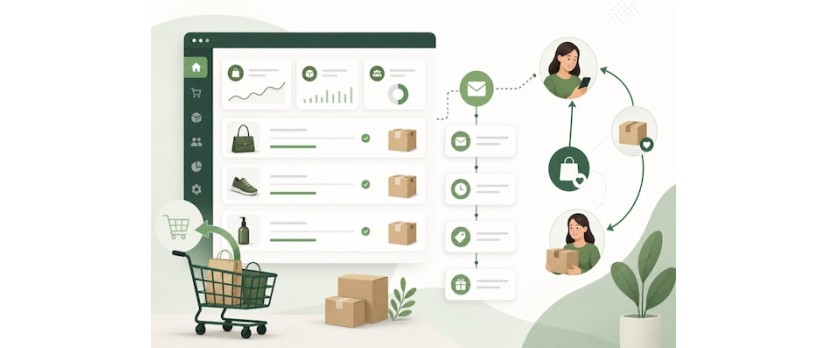
For many merchants, launching a store feels like the hard part of eCommerce. Platforms like OpenCart make it easier to manage products, payments, and orders without giving up control of the store. But once the store is live, the next challenge becomes more important: eCommerce customer follow-up.
A working store can process orders, but it cannot automatically recover abandoned carts, improve repeat purchase rates, or manage post-purchase conversations well on its own. That is why many merchants discover that their growth problem is not store setup. It is conversion and retention after buyer intent appears.
Why store functionality does not guarantee eCommerce conversion
OpenCart gives merchants the commerce layer: catalog management, checkout, payments, and order processing. That layer is necessary, but it only supports the transaction itself. It does not solve the full revenue journey.
A visitor can add products to cart and leave. A first-time buyer can place an order and never return. A customer can have a post-purchase question and lose trust after a weak response. These are all eCommerce conversion problems tied to follow-up, not site setup.
The biggest revenue leaks happen after customer intent appears
Most online stores lose revenue in a few predictable places:
• Abandoned cart recovery is weak or inconsistent.
• Post-purchase follow-up is generic or missing.
• Customer service conversations do not support retention.
• Repeat purchase campaigns are delayed or irrelevant.
• High-intent shoppers are not re-engaged at the right time.
When those gaps remain open, merchants often blame traffic or platform limitations. In reality, the issue is usually poor eCommerce customer follow-up.
Why merchants need a conversion layer after the commerce layer
A stronger eCommerce setup separates two systems.
1. Commerce system
This includes storefront operations, checkout, payments, and order management. OpenCart handles this layer well.
2. Follow-up and conversion system
This layer supports abandoned cart recovery, post-purchase follow-up, retention messaging, and repeat purchase strategy.
When merchants depend only on the commerce system, customer communication stays reactive. When they add a dedicated follow-up layer, they can protect more revenue across the full buying journey.
What strong eCommerce customer follow-up should include
An effective follow-up system should help merchants answer key questions quickly:
• Which customers abandoned checkout and need outreach?
• Which new buyers need post-purchase follow-up?
• Which customers are close to a second purchase?
• Which support conversations are really retention opportunities?
• Which inactive buyers should be reactivated now?
Those questions sit at the center of eCommerce conversion and repeat purchase growth.
Where a sales agent helps online stores convert more intent
This is where a sales agent can add value. The store platform manages transactions, while the sales agent layer manages ongoing customer communication and structured follow-up. That makes it easier to turn buyer intent into completed orders and completed orders into repeat revenue.
In that setup, OpenCart remains the commerce engine, while Dealism supports the follow-up system that improves abandoned cart recovery, post-purchase follow-up, and long-term customer retention.
Why better follow-up improves repeat purchase growth
Many eCommerce brands do not need a new storefront to grow faster. They need better follow-up after the click, after the cart, and after the first order. That is where conversion rate gains and repeat purchase gains usually happen first.
If a store already has traffic and orders but weak retention, the highest-impact fix is often a stronger eCommerce customer follow-up system. That is the layer that keeps the conversation moving and protects more revenue over time.



Login and write down your comment.
Login my OpenCart Account