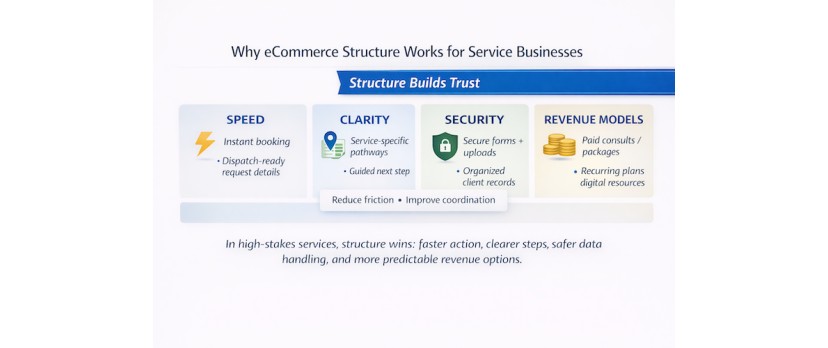
E-commerce platforms are typically associated with selling physical products. But for service-based businesses, they can be just as powerful not for selling inventory, but for generating leads, structuring client intake, and improving operational efficiency.
Industries such as divorce law and water damage restoration operate in high-pressure environments. Clients are often making urgent decisions. In these situations, a website must do more than describe services it must guide visitors toward immediate action. An eCommerce-enabled structure makes that possible.
Turning Legal Services Into Structured Digital Pathways
Divorce law is a sensitive and emotionally charged practice area. Prospective clients searching for representation are looking for reassurance, clarity, and a clear next step. A static website with general information is rarely enough.
Jimeno & Gray provides a strong example within the divorce law sector, where clear service presentation and structured client engagement are critical. When a firm organizes its website around specific services such as custody matters, asset division, or mediation it helps both clients and search engines understand its focus.
An eCommerce framework enhances this further. It allows firms to integrate:
Online consultation booking
Secure document submission portals
Downloadable legal guides in exchange for contact details
Automated follow-up sequences
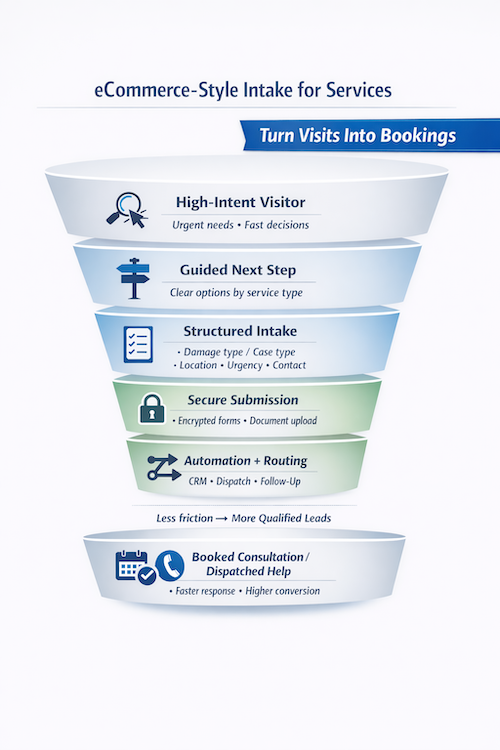
This turns a website into a working intake system. Instead of waiting for phone calls, the firm can capture structured information immediately.
Gerrid Smith, Chief Marketing Officer at Joy Organics, explains, “Digital structure reduces friction. When users can take clear next steps online, engagement increases naturally.”
For legal services, clarity builds trust and trust drives inquiries.
Supporting Urgency in Restoration Services
Water damage restoration presents a different but equally urgent scenario. Homeowners facing flooding or storm damage are not casually comparing providers. They need immediate assistance and reassurance that help is available.
Romexterra Restoration serves as a strong example in the restoration space, where response time and service clarity directly affect client decisions. When a restoration company clearly outlines the types of damage it handles — such as emergency water extraction, mold remediation, or storm recovery it removes uncertainty for potential customers.
An eCommerce-style intake system strengthens this process by allowing visitors to submit detailed service requests online. Instead of a basic “Contact Us” form, structured fields can capture location, damage type, urgency level, and insurance information. This data can be routed directly to dispatch teams or CRM systems, improving response efficiency.
Timothy Allen, Director at Corporate Investigation Consulting, notes, “Structured digital systems create clarity in high-pressure situations. Consistent data collection improves accountability and operational coordination.”
For restoration businesses, automation enhances speed and speed builds credibility.
Secure Infrastructure Builds Confidence
Both divorce law and restoration services involve sensitive information. Legal cases require financial disclosures and personal documentation. Restoration projects often involve insurance details and property records.
Dr. Nick Oberheiden, Founder at Oberheiden P.C., observes, “In professional services, infrastructure sends a message. Clients expect systems that protect their information and reflect operational discipline.”
An eCommerce platform supports secure forms, encrypted data handling, organized client records, and streamlined communication. This technical foundation strengthens professionalism and reduces administrative friction.
Beyond Lead Capture: Creating Revenue Opportunities
eCommerce tools also allow service businesses to monetize expertise in new ways. Law firms can offer paid initial consultations, structured advisory sessions, or educational digital resources. Restoration companies can introduce inspection packages or ongoing maintenance plans.
Brett Gelfand, Managing Partner at Cannabiz Collects, explains, “Recurring and structured service models create financial predictability. Digital systems make those models easier to implement and scale.”
Instead of relying solely on reactive inquiries, businesses can build predictable engagement channels supported by structured digital infrastructure.
From Brochure Websites to Operational Platforms
The difference between a static website and an eCommerce-enabled platform is functionality. A brochure site provides information. A structured platform captures intent, qualifies leads, and guides visitors through defined steps.
For firms like Jimeno & Gray, that means turning website visitors into scheduled consultations with organized intake documentation. For companies like Romexterra Restoration, it means capturing urgent service requests with detailed information before the first phone conversation.
In both cases, digital structure reduces friction, improves conversion rates, and strengthens internal coordination.
Digital Appointment Booking as a Growth Engine for Modern Healthcare Clinics
Htet Aung Shine, Co-Founder of NextClinic, explains, “In healthcare, speed and convenience directly influence whether a patient books or abandons. At NextClinic, we use eCommerce-style online booking and integrated payment systems to remove friction from the appointment process. Patients can instantly view availability, secure a consultation, and complete payment online similar to purchasing a product. This transforms our website from an informational page into a lead-generation engine. When healthcare services are structured like streamlined digital transactions, patient acquisition becomes far more predictable.”
Turning Home Renovation Services Into Click-to-Convert Digital Offers
Desmond Dorsey, Chief Marketing Officer at Bayside Home Improvement, says “In the home improvement industry, hesitation often comes from unclear pricing and next steps. We’ve found that structuring services like consultation packages or project estimates within an eCommerce-style framework increases inbound leads significantly. When homeowners can request quotes, schedule consultations, or secure project slots online, it shortens the decision cycle. By treating services like bookable products, we create clarity and urgency. That shift turns website visitors into qualified prospects ready to move forward.”
Blending Treatment Services and Online Product Sales to Capture Immediate Demand
Eli Harel, Partner at Lice Busters, explains, “In urgent-care services like lice treatment, families often search for immediate solutions. By combining professional treatment bookings with the ability to purchase prevention kits and screening tools online, we capture leads at different stages of urgency. Our eCommerce functionality allows clients to either schedule treatment instantly or begin with products while considering in-person service. This dual approach keeps potential clients within our ecosystem instead of losing them to marketplaces. For service businesses, integrating retail elements creates multiple entry points for lead generation.”
Conclusion
Service-based businesses no longer need to rely solely on phone calls and manual processes to generate leads. By adopting eCommerce frameworks, they can transform their websites into active intake systems that automatically capture, qualify, and nurture inquiries.
Whether supporting sensitive legal consultations or responding to urgent property damage, structured digital infrastructure allows businesses to operate more efficiently and convert high-intent traffic into meaningful engagement.
For service industries where urgency and trust matter most, eCommerce platforms are not just tools for selling products they are engines for growth.



Login and write down your comment.
Login my OpenCart Account